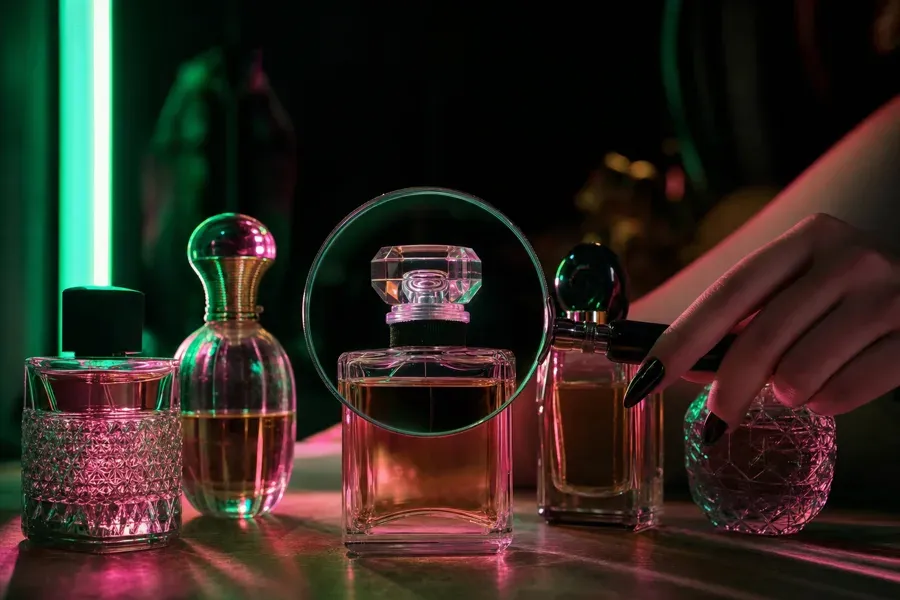
Perfume is the most counterfeited beauty product in the world. And a fake perfume isn't just a €60 rip-off; it’s a liquid that hasn't undergone any health safety checks and comes into direct contact with your skin. Here is the exact checklist our experts use to inspect every bottle.
1. The cellophane
On a genuine one: taut and thin, with crisp folds and a discreet seal. On a fake: thick and loose-fitting, with visible tape.
2. The box
Rigid cardboard, sharp printing, and error-free text. Fakes often give themselves away with typography that is slightly too bold or a logo that is out of place.
3. The batch code—always a key indicator
It must appear on both the box and the bottle, and the codes must match. Missing from one? Rejected. Format inconsistent with the brand's naming conventions? Rejected.
4. The glass
A genuine bottle is heavy and thick, with no bubbles or visible mold seams. Fakes use thinner glass with molding defects.
5. The atomizer
Smooth action, producing a fine, even mist. A spray that sputters or leaks is a bad sign.
6. The fragrance itself
The color matches official photos—neither too pale nor too dark. Cloudy liquid is an automatic deal-breaker.
7. The scent profile
A genuine perfume evolves: top, heart, and base notes. A fake smells like "scented alcohol" for 20 minutes and then vanishes.
8. The price
A "brand-new, sealed Chanel" for €25 doesn't exist. Period.
On BeautySwapp, every perfume goes through this checklist before being listed, and you get a refund if it doesn't pass inspection. Hunting for gems? Yes. Russian roulette? No.