
This is THE confusion we see everywhere, even among well-intentioned people. So, let’s set the record straight once and for all.
The barcode: a checkout label
The barcode (EAN) identifies a specific product reference—e.g., "Lipstick X, shade Y, size Z." It is identical across millions of units. It’s there for the store to process the sale, not for you to verify anything. A counterfeiter can copy it in 30 seconds: it’s printed, public, and proves absolutely nothing.
The batch code: the ID card
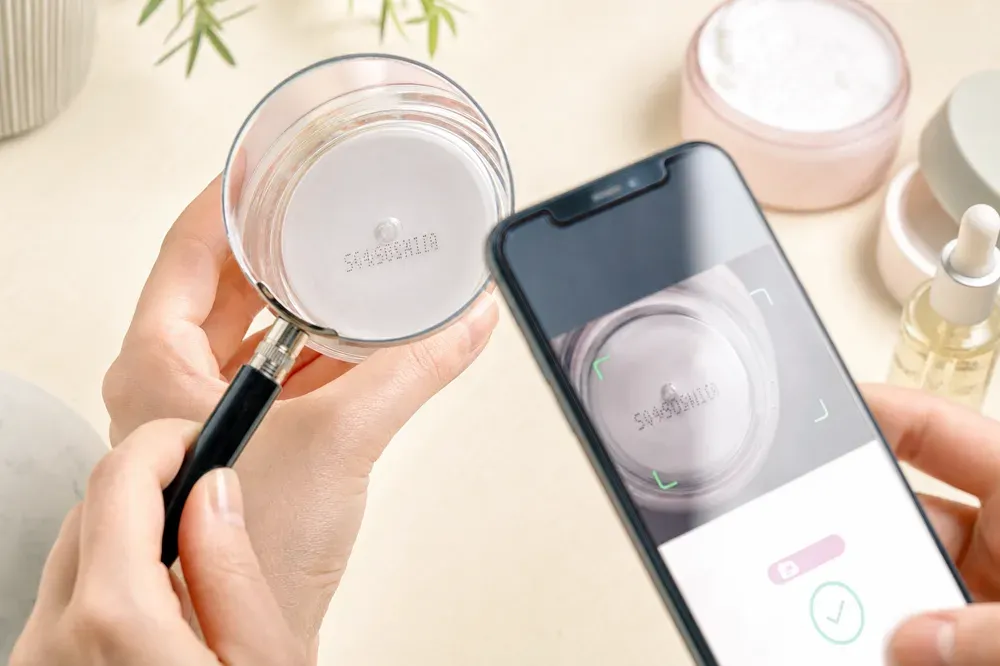
The batch code identifies the specific production run of your particular item: which factory, which production line, and which date. It is often embossed or hot-stamped onto the bottom of the product or the crimped end of the tube. This is what allows you to trace the manufacturing date and estimate the product's remaining freshness.
Why counterfeiters hate batch codes
Copying a barcode is easy. Reproducing a valid batch code is much harder: the format must match the brand's specific system exactly, the decoded date must be plausible, and the marking technique (embossing, laser engraving) must be correct. A missing, filed-off, or sticker-printed batch code is an immediate red flag.
The Swappie approach
For every BeautySwapp listing, the batch code is decoded and verified before publication, and the expiration date is displayed in the "Freshness and Condition" box. As for the barcode? We leave that to the cash registers.